
Handwritten cards are physical cards with a message written using a pen. A person can write one by hand, or a service can use a machine to guide the pen. Scribble uses pen-writing equipment and mails cards within the US. Further reading: Postalytics compilation.
What Counts as a Handwritten Card
A handwritten card is any physical card where the message was written by hand, either by a person or by a machine writing with a real pen. The envelope is usually handwritten too. That part most senders skip, and it matters more than they realize.
The format varies. Folded greeting cards. Flat notecards. Thank-you cards. Holiday cards. Postcards with handwritten messages. What they share is the handwriting. That's what separates them from printed direct mail.
The Difference Between a Handwritten Card and a Handwritten Note
People use these terms interchangeably, and that's fine. A handwritten card typically refers to a folded format with a design on the outside and a message inside. A handwritten note tends to be shorter, written on a flat card or slip of paper.
For business use, cards are more common because the format signals more intention. You picked a design. You added a message. That layered effort registers with recipients in a way a quick handwritten note doesn't always achieve.
Why Handwritten Cards Work: The Psychology Behind Them
The reason is simple: they're rare.
The average person receives 121 emails per day. Most get skimmed or deleted in under three seconds. Physical mail is handled differently. Handwritten mail is handled differently still.
When something is scarce, it signals effort. When it signals effort, the recipient assumes the sender genuinely cares about them. That assumption drives behavior in ways that no algorithm-optimized subject line can replicate.
A note can feel personal when it refers to the actual recipient and occasion. That is a reason to choose the wording carefully, not a verified consumer-preference percentage or response guarantee. Further reading: Postalytics compilation.
The recipient may read, save or discard a mailed card. Scribble can show when it is mailed, but cannot establish when someone reads it. Further reading: Postalytics compilation.
Personalization Amplifies the Effect
A correct name is the start of personalization. A reference to a conversation, purchase or milestone can make the purpose clearer. Test the message; there is no verified 135% lift to assume from adding a name. Further reading: Postalytics compilation.
One powerful use case is in the nonprofit sector, where handwritten cards help organizations boost donor retention and build deeper relationships with supporters.
Physical Objects Have Staying Power
You can't scroll past a card. It sits on a desk, gets pinned to a board, ends up on a shelf somewhere. Digital ads disappear the moment you look away. A handwritten card stays in the environment, keeps signaling your brand, for days or weeks after it arrived.
That's dwell time no paid digital channel can buy.
Who Uses Handwritten Cards and How It Pays Off
B2B Sales and Outreach
Sales teams use handwritten cards to break through to prospects who've gone cold. A card after a demo, after a proposal, or just to stay top of mind does something a follow-up email doesn't: it's unexpected. That surprise creates a moment of genuine attention.
For B2B follow-up, choose a reason the recipient would recognize and make it easy to reply. Broad consumer survey intentions do not predict renewed business for a particular campaign. Further reading: Postalytics compilation.
Scribble lets you prepare personal messages for a list of recipients, then handles the handwriting and mailing. See how sending cards to a list works.
Customer Retention
This is where handwritten cards produce the clearest ROI.
A card sent after a first purchase, on a customer anniversary, or following a support resolution turns a transactional moment into a relationship moment. Customers who feel appreciated churn less. They refer more. They spend more over time.
Use how Scribble automations work for birthdays, anniversaries or events from your own tools. You choose the message and the recipients; Scribble handles the writing and mailing.
Real Estate
Agents send handwritten cards to new homeowners, past clients around listing anniversaries, and neighborhoods they're farming. In an industry where trust drives everything, a physical card carries more weight than a drip email sequence.
Professional Services
Lawyers, accountants, financial advisors, consultants. High-value, relationship-driven work where a card after a major milestone, closing a deal, completing a project, finishing tax season, reinforces the relationship at exactly the right moment.
The ROI Case for Handwritten Cards
Return depends on audience, offer, cost and incremental contribution. Supplier roundups collect results from different contexts; they are not a single comparable ROI benchmark. Further reading: Postalytics compilation. Further reading: Postalytics compilation.
Market-spend reports can describe the size of a channel. They do not establish whether it will work for your business. Check the source year and definition before using any market-size figure. Further reading: UPrinting compilation. Further reading: Postalytics compilation.
Handwritten cards sit at the premium end of that channel. Higher cost per unit, yes. But also higher open rates, higher response rates, and longer shelf life than any other format in the mix.
Cost Per Response vs. Cost Per Send
Most marketers look at cost per send and stop there. The number that actually matters is cost per response.
Compare costs per qualified response or incremental sale using the same definitions. A higher response rate can still be less profitable when the contact costs more. Test the format at your actual volume.
For high-ticket customer acquisition or retention, run the math on your own numbers. Don't rule out the channel based on unit cost before you've looked at what a response is actually worth.
How to Write a Handwritten Card That Gets a Response
The message is what makes or breaks a card. Here's what consistently works:
Reference something specific. A shared conversation, their company name, something recent and real. Generic messages produce generic results.
Keep it short. Three to five sentences is plenty. This is not a letter. White space signals confidence, not laziness.
Write the way you talk. Formal language kills the warmth that makes handwritten cards work in the first place. Write as you'd speak if you ran into them at a conference.
Make the next step clear if you want one. A question, an invite, a reason to reply. If you want engagement, give them something to respond to.
Skip the hard sell. Cards that open with an offer feel like ads. Cards that open with genuine recognition feel like people.
The goal is to make the recipient feel like you thought about them before writing. That feeling is real even when the production process is automated, as long as the message itself is personal.
Automating Handwritten Cards Without Losing What Makes Them Work
The obvious question: if it's automated, is it still real?
Yes, when it's done right.
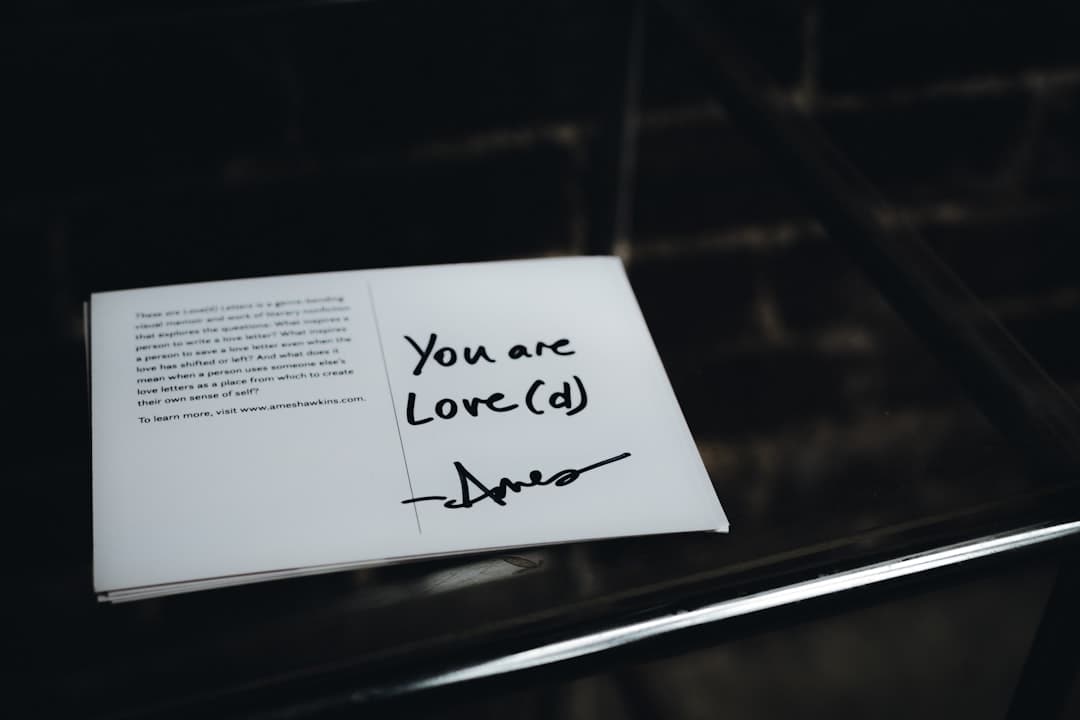
Scribble uses robots that write with real pens on real paper. Ink flows the way a human hand produces it. The slight variation in letter spacing, the natural pressure changes, the occasional small ink bleed. It all looks genuinely handwritten because it is genuinely handwritten, just executed at scale.
The message still needs to be personal. Automation handles the physical execution. You write the words. You decide who gets what and when.
The result: you can send 500 handwritten notes in the time it would take to write five by hand. Without sacrificing the quality that makes them work.
What to Avoid When Sending Handwritten Cards
A few things consistently kill the effect:
Sending the same template to everyone. If it could have been sent to anyone, it won't feel like it was sent to them.
Wrong timing. A card with no connection to a recent moment feels random. Tie it to something that makes sense for that recipient.
Too much in one message. Multiple offers, a QR code, a URL, a discount, an upsell. Pick one thing. Cards are not landing pages.
Printing the envelope while handwriting the card. If the envelope is clearly machine-printed, the card loses its impact before it's even opened. Match the effort on both.
Low-quality handwriting. If the writing looks like a font, recipients notice immediately. Quality matters more than most people expect.
Ready to pick a provider? Our guide to the best handwritten card services compares ten options on price, minimum order, and whether they actually use a real pen.
Frequently Asked Questions About Handwritten Cards
Are handwritten cards worth it for small businesses?
Yes, particularly for local businesses, service businesses, or any business where customer lifetime value is high. A single retained client often covers the cost of dozens of cards. Start with a small batch, track the response rate, and scale what works.
How long does it take to send handwritten cards through an automated service?
With Scribble, cards ship within a few business days. Bulk orders scale quickly because production is automated. No waiting around for someone to sit down and write.
Can robotic handwriting really pass as human?
It can when the service uses actual pens on actual paper rather than a printed simulation. The test is whether someone holding the card can tell the difference. With quality robotic writing, they won't.
What's the best use case for handwritten notes in business?
Customer retention consistently produces the clearest ROI. Post-purchase cards, anniversary outreach, and win-back campaigns are all high performers. Cold outreach to prospects is second, particularly in B2B sales where a single closed deal covers the cost of an entire campaign.
Ready to send your first campaign? Scribble handles the writing, the mailing, and the logistics. You write the message. We do the rest.